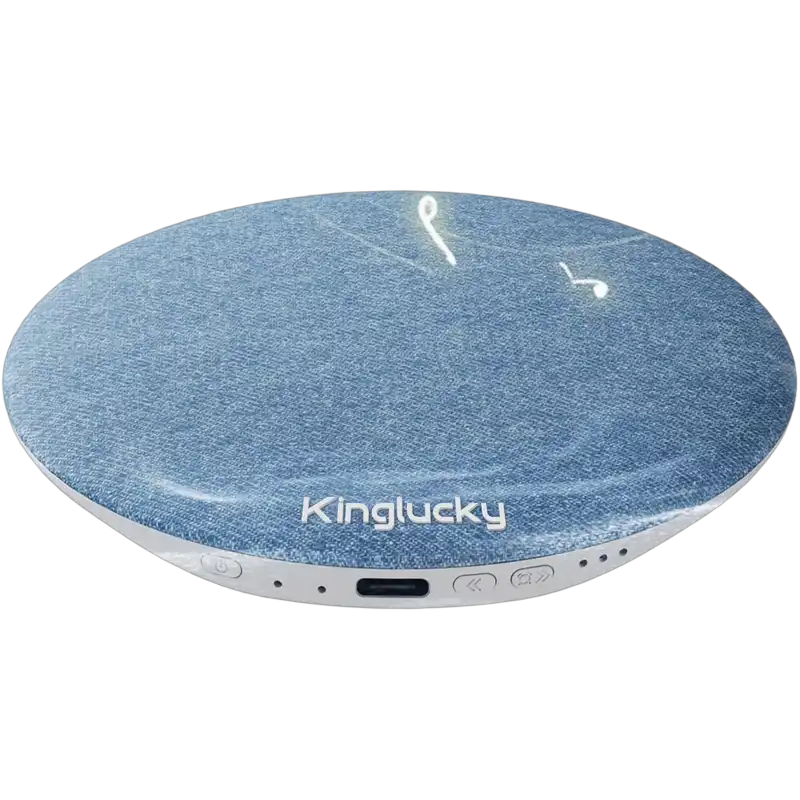
Not a supplement. Not a meditation app. Just a flat speaker that hides under your pillow and quietly handles the rest.
The Sleep Crisis Is Real and the Solutions Are Mostly Overpriced
Roughly one in three American adults isn’t getting enough sleep on a regular basis — a figure that has held stubbornly at crisis levels through years of wellness app launches, weighted blanket trends, and magnesium supplement marketing. The causes are structural: shift work, caregiving responsibilities, financial stress, chronic anxiety, and the specific modern affliction of lying awake in a quiet room while a brain trained on overstimulation refuses to downshift. What most people reach for first is their phone — a podcast, a playlist, some ambient YouTube video of rain sounds — which solves the audio problem while creating a screen exposure problem and guaranteeing the phone stays on the nightstand at full brightness until they fall asleep on top of it.
The sleep tech industry’s answer to this has been earbuds designed specifically for sleeping, sleep headbands with embedded speakers, and white noise machines that sit on the nightstand and fill the whole room. All three work, imperfectly, for different people. Earbuds create pressure points that side sleepers feel by 2 AM. Sleep headbands work but require wearing something on your head and keeping it charged. Room-filling white noise machines help the listener but also help the partner, the dog, and anyone else in earshot who didn’t opt in.
The problem with every sleep audio solution before this one is that it’s either too intrusive to wear or too loud to share a room.
Flat, Hidden, and Not Your Partner’s Problem
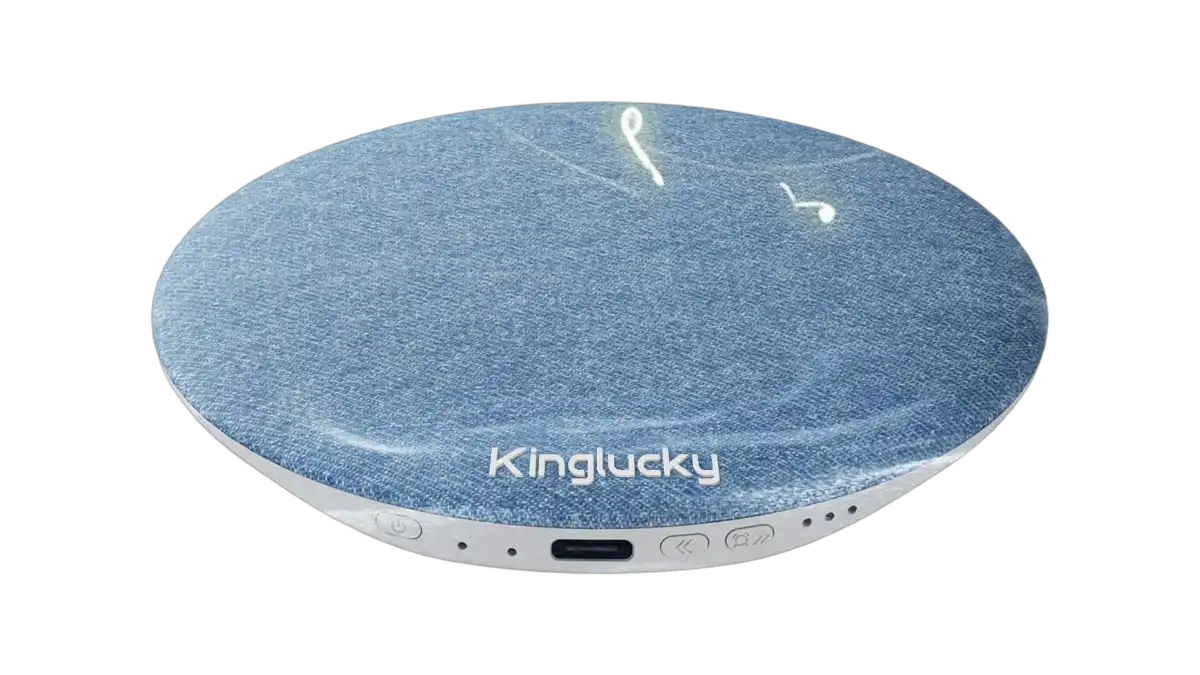
The Kinglucky X50 is an under-pillow speaker — a category that sounds obvious in retrospect and yet took longer than it should have to execute well. At 11mm thin and 48 grams, it slides beneath a standard pillow without creating a noticeable bump. You place it near the pillow’s edge, close to where your ear rests, and the sound reaches you at low volume while staying well below the threshold where it crosses the bed and becomes your partner’s problem. For anyone who has ever been on the receiving end of someone else’s bedtime podcast at midnight, this is a more considerate architecture.
Bluetooth 6.0 pairs quickly and holds a steady connection for streaming anything from your phone — music, audiobooks, podcasts, sleep meditations, ASMR, whatever the pre-sleep routine calls for. When you’d rather not be tethered to your phone or screen, the X50 switches to its built-in sleep sounds: white noise, pink noise, ocean waves, rain — simple, loopable, and autonomous. No app open. No screen glowing. No algorithm suggesting what to listen to next at the exact moment you were almost asleep.
Under your pillow, 11mm thick, 48 grams. Your partner won’t hear it. You might forget it’s there — which is exactly the point.
The Detail That Makes This More Than a Speaker
The auto-off sleep timer is where the X50 stops being a speaker and starts being a sleep tool. You can set it for 30, 60, or 90 minutes, and the audio stops automatically once the timer expires — no sound playing all night, no waking at 3 AM to turn it off, no dead battery in the morning from running continuously. For anyone who uses sleep audio as a transition mechanism rather than background noise, this is the feature that makes the whole thing work the way it’s supposed to.
The distinction between white noise and pink noise is worth understanding here rather than glossing over it. White noise is the classic static hiss — equal energy across all frequencies, effective at masking sudden sounds but fatiguing over long exposures for some listeners. Pink noise rolls off the higher frequencies, producing a warmer, deeper sound — more like rain or wind than static — that research has associated with improved slow-wave sleep and better memory consolidation. Having both available without needing a separate app or machine, at a volume level calibrated for close-range pillow listening rather than room coverage, is a meaningful practical advantage over standalone white noise machines that typically sit on a nightstand and broadcast at room scale.
The 300mAh battery delivering 10 hours at 60% volume is correctly sized for this use case. A full night of audio at moderate volume, or a week of 30-minute wind-down sessions before the timer kicks in, on a single charge. USB-C means the cable is already in your life and you don’t need to track down anything proprietary. The 9.6cm wide form factor fits easily inside a standard pillowcase or pillow cover if you’d rather keep it contained and out of the wash.
White noise and pink noise built-in, auto-off timer, 10-hour battery. This isn’t a speaker you put under your pillow. It’s a sleep system disguised as one.
Who Gets the Most Out of This
The X50 is purpose-built for three overlapping groups: side sleepers who can’t wear earbuds comfortably through the night, people sharing a bed or room who need private audio without being inconsiderate about it, and anyone running a bedtime audio routine — podcast, meditation, audiobook, ambient sound — who has grown tired of managing it through their phone screen.
It also fits a specific household configuration that’s increasingly common: partners with different sleep schedules or different auditory needs, where one person’s sleep soundtrack is another person’s noise intrusion. Placing the X50 under one pillow and setting a timer addresses that conflict without requiring negotiation, separate bedrooms, or noise-canceling headphones that weren’t designed for lying down.
The audio quality framing matters: this is close-range, low-volume, sleep-optimized listening. At the volume levels appropriate for sleeping — quiet enough not to disturb anyone else, loud enough to mask ambient noise — the X50 performs its intended function very well. If you’re expecting it to produce audiophile-grade sound at higher volumes, you’re evaluating the wrong product. This is a sleep tool, not a speaker. The distinction matters because the former is a standard the X50 meets cleanly, and the latter is a standard that would require a fundamentally different product.
Judge it as a sleep tool — not a speaker — and it’s one of the more quietly effective purchases you’ll make for your bedroom this year.
The Simplest Version of a Better Night
Sleep hygiene advice tends to scale upward — better mattress, cooler room, blackout curtains, no screens after 9 PM, magnesium before bed, consistent sleep schedule regardless of weekend plans. All of it is correct and very little of it is convenient. The Kinglucky X50 sits at the other end of the intervention spectrum: a small, cheap, immediately usable change to the auditory environment of your bedroom that requires no habit change, no subscription, and no adjustment period. You put it under your pillow, press one button, and fall asleep to whatever has always helped you fall asleep — just without the screen, the earbuds, or the white noise machine filling the room.
It won’t fix structural sleep problems. Nothing that costs this little and fits in a shirt pocket will. But for the specific, common, entirely fixable problem of bedtime audio management in a shared space — it’s the most practical solution currently available at any price.
The best sleep tech is the kind that disappears under your pillow and lets you stop thinking about sleep tech.